There are many versions and at the same time many meaningful interpretations of Ramayana. I am trying to offer one which is a kind of mixture of some of them. Gaussian Mixture Model! :-)
Terminology first!
Dasharatha: Ratha is body and dasha is ten senses. It signifies that, you would (be)get Rama only if you are able to skillfully (kaushalya in Sanskrit) rein in your 10 wandering senses. That is why Rama is the Son of Dasharatha and Kausalya.
Sumitra: She is with Dasharatha. Su means good and Mitra means Sun. Being aware is likened to shining the light of Sun. Probably the reason behind Laxmana being her son.
Kaikeyi: Warrior princess from Kekaya. Keka means horse in Sanskrit. Horse symbolises warrior spirit as it’s used by the warriors. In some interpretations, She represents fate. Or preordained events. Past karma. In short, when you are Dasharatha, you are skilled in controlling or protecting (Kaushalya), you are fully aware and alert (Sumitra) and you are a peaceful warrior (Kaikeyi). These wives are his abilities.
Manthara: Literally, in Sanskrit, it means hunchbacked. Meaning, she carries a lot of burden of past negativities on her back. It also means, she is the reason behind keeping the pot stirring. Stirring the discord by inviting disharmony. Maya!
Vasishtha: Guru, intuition
Rama: Consciousness
Laxmana: Awareness
Sita: Mind
Shabari : Faith
Vishwamitra: Divine providence
Hanuman: Prana, Life Force, Breath, Meditation, Practice of Awareness
Shatrughna: One who protects from enemies. Also he serves Bharata. He might be a symbol or stand for the karma performed without any expectations. Nishkama karma. Guided by a pure surrender.
Dandakaranya: Where Rama spends 14 years! Dandaka means regulations. For example, Yama and Niyama, etc. Sadhana or meditation practice has to be full of regulations.
Rishyamuk: Abode of Rishis, sages. Also it is a refuge for Hanuman and Sugreeva. A place where good thoughts/deeds decide to wage battle against the evil.
Panchavati: A place (five banyan trees), where we perform penances, like Yama and Niyama (five each, according to Patanjali Yoga Sutras)
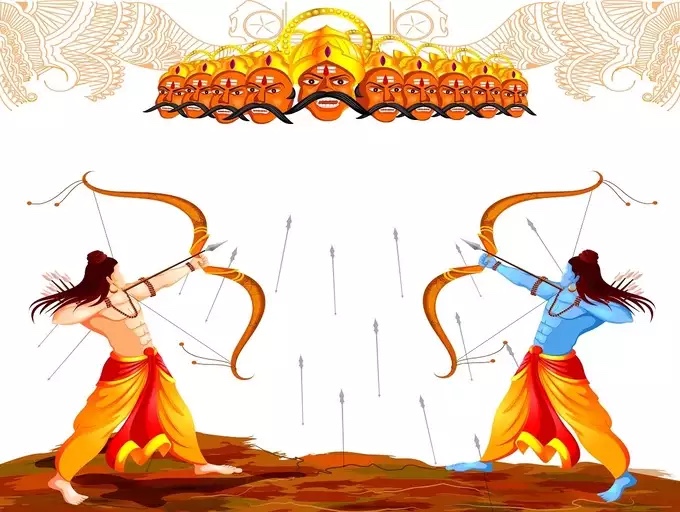
Ravana: Ego! He knows thoroughly how to take our possession! He is cunning. He is the most powerful. He is 10 headed. It means he manifests through different ways we don’t know. We think we killed Ravana if we cut his head. But as soon as we start celebrating, another head pops up! He is the massive monster within us!
Lanka: Delusional World full of Material pleasures.
Monkeys: Wandering Thoughts
Bharata: A pure surrender
Ayodhya: City with no Conflict. Clear Vision!
Events in brief:
Birth of Rama: One can attain Consciousness if one is able to skillfully rein in his 10 senses.
Vishwamitra takes Rama to his tutelage: Vishwamitra, literally translates as universal friend, is that aspect of Lord, or intuition, that guides us to become worthy of going to our next birth. It is that Guru principle which introduces us into this universe.
Ahalya brought back to life by Rama: This story tells us about the Divine Grace. Spiritual journey starts with His Grace. It’s not within our control. Nothing happens without His Grace. We also got this birth by His Grace! So that we get liberated. And unless He brings us back to life, we keep wandering in the netherword or astral world, where we are incapable of doing karma!
Rama weds Sita: Consciousness expands through life forms. It merges with Mind.
Kaikeyi asks Dasharatha to send Rama to exile: This is predetermination. Sanchit karma. No one knows what portion of this karma he carries. It’s unknown. Unpredictable. Unexplainable. That’s why her son Bharata finds it weird, illogical to understand why did she wish that way, so much as to the extent of calling her his enemy. Kaikeyi was also unable to explain the reason behind her wish!
Rama and Sita leave Ayodhya and go to the Jungle: Initially mind is innocent but at the same time it is naturally curious. It remains with Consciousness. However conflicts (doubts) start appearing in the mind. Therefore Rama and Sita had to leave Ayodhya.
Dasharatha dies because of Putra Viyoga: When Rama and Sita leave the state of No Conflict, Dasharatha has no place there. He has to die as he is not capable now to rule the City of No Conflict. Therefore Dasharatha dies.
Laxmana accompanies Rama and Sita: Awareness is always there within us. Always with Rama.
Bharata rules Ayodhya indirectly: Bharata, a pure surrender, carries His paduka on his head and places them onto the throne. Surrender starts the spiritual journey towards liberation. Also surrender is liberation. So this event is beautifully placed at the start of this spiritual journey.
Jungle where Monkeys and Ravana’s brothers and sisters reside: Dictionary defines the word Jungle as: “A location marked by an intense competition and struggle for survival”. Competition between good and bad. Jungle also implies all pervasive uncertainty. Then Mind becomes a wandering monkey mind. Full of good and bad thoughts. Egoic tendencies (Ravana’s cousins) act as further entrapment.
In Jungle, Sita is kidnapped by Ravana: Finally Mind falls prey to the Ego. Laxmana warns Sita not to cross The Line (Laxmanarekha). But Ego is so powerful that Awareness warning is easily ignored. Ravana takes Sita to Lanka, the world of delusion. Materialistic pleasures. Here, Rama cries loudly for Sita. Because he loves Sita. We come across the essential nature of Consciousness which is Love, compassion!
Bala (little) Hanuman: Breath which is not directed. This breath can be destructive and invites various diseases if left undirected.
Rama meets Shabari: Shabari is the embodiment of faith. As we say, Faith can move mountains. So, before we start meditation practices, we must have faith that this practice is leading us towards Rama.
Hanuman then meets Rama: Pranayama! One day comes when our mind realizes that something is wrong. We then do meditation by taking deep breaths. This opens the gateway to Consciousness. We can easily access Consciousness when we take a deep breath. This is when Rama and Hanuman meet for the first time.
Hanumana introduces Rama to Sugreeva: Once we start meditating, good thoughts naturally become our allies.
Rama kills Vali: Sugreeva (king of good thoughts) and his brother Vali (king of bad thoughts) are brothers as they are thoughts after all. Bad thoughts are so powerful that anyone who comes to fight them from front becomes half in his strength. It is very difficult to overcome bad thoughts. Somehow, in the process of meditation, the Consciousness, out of pure Love, helps us here and kills Vali by hiding himself. Bad thoughts are simply unaware of who killed them. This is Divine Grace! Serendipity at work! Or a Blessing in disguise! However, we must be honest in our fight against bad thoughts and continue meditating. Love will help us kill them.
Laxmana rebukes Sugreeva: By now, we are out of misery. However, because our good thoughts yield good dividends in our materialistic life, we again become entangled and attached to this beautiful materialistic world. And forget to find the lost mind. Good thoughts promise us initially that they would help us regain our lost mind. Sugreeva promises Rama to help find Sita. However, he forgets his promise and continues to enjoy the material dividends. Laxmana, our Awareness, has to rebuke Sugreeva thereby reminding him about the core purpose, the promise, to find the lost mind.
Hanuman finds Sita: With proper meditation, we kind of find the lost mind and realise the Love of Consciousness. Sita has suffered so much in the Ashokvatika (garden where there is no sorrow). It is materialistic delusional garden where we feel we are merry. However actually we realize afterwards, that we are suffering. This is not a lasting peace, lasting happiness. We get introduced to the law of impermanence. After a lot of contemplative and non-contemplative meditation (Hanuman), we regain our lost mind (Sita). At this point, after this realization, Sita repents and cries for Rama. Our mind repents and desires only Rama and nothing else!
Lanka is burnt into ashes: Hanuman burns entire Lanka leaving Ravana alone. As we progress through the stages of meditation, our egoic tendencies die. We no longer are deluded. We become dispassionate. Here too, we are still in possession of ego even after realising the call from Love. However, here, an irrevocable process of liberation starts.
Laxmana needs Sanjivani: Indrajit (who rules your body), son of Ravana, is so powerful that he throws Naaga Paash (serpent of desire) and momentarily even Laxmana fades! Our Awareness sleeps. It is then by the constant and intense practice of meditation that Hanuman gives Sanjivani to Laxmana by airlifting Dronagiri Mountain. I refer to the interpretation of Drona in Mahabharata, by Shri Paramahansa Yogananda. Drona means habit. We really have to work hard to become habituated to meditation. This tells us how mountainous task it is, in itself! Winning over Indrajit is not at all easy. It also depicts one key aspect of Consciousness. Here as well, Rama cries for Laxmana and literally directs Hanuman to do this mountainous, momentous and monumental task. Compassion. Love. Rama loves the Awareness within us, so much.
Bharata shoots arrows on Hanuman while carrying Sanjivani: I think, it’s just to make sure, every meditation practice has to be done with a pure surrender. Not with any sense of pride. Hanuman felt that he alone can help Rama and he took pride in his strength. We might also feel that we are powerful and genuine sadhakas like no one else! Bharata, naturally, has to intervene here by shooting arrows of surrender, to keep Hanuman “grounded”. Right?
Rama kills Kumbhakarna: As mentioned in this blog, Kumbhakarna is the embodiment of Tamas. Sleep, laziness, inactivity, hopelessness, inertia to change. This is awakening. Getting out of the slumber.
Laxmana kills Indrajit: One then establishes full control over the body and its senses by the practice of Awareness.
Hanumana slays Ahiravana: As this blog tells us, meditation (practice of Ashtanga yoga) finally rid us of all the 5 afflictions or causes of rebirth.
Rama defeats Ravana: Rama with the Monkeys come to Lanka and defeat Ravana. Consciousness, along with pure thoughts that contain (think about) only Rama, then acts through you thereby destroying completely your Ego.
Sita’s test of chastity: Our Mind then has to face different, unpredictable yet tough situations. Our mind then has to find the way out by overcoming those situations. Our mind just doesn’t leave Rama now. It’s now in union and in unison with Rama.
Rama confers Lanka upon Vibheeshana: As this blog tells us, we become embodiment of Dharma and devotion. And we are now eligible or qualified to rule Lanka (His manifestation, this world). Remember the proclamation in Gita?
“Dharma sansthapanarthaya sambhavami yuge yuge!”
He will never let dharma die!
Rama rules Ayodhya: Then our Consciousness rules our body and mind. In a state of no conflict.
Rama leaves Sita and Sita merges with Earth: The body remains no body. Similarly our mind remains no mind. The realisation of I am not my body. I am not my mind. I am pure consciousness. Tat tvam asi! Therefore the mind, which holds concepts, has to go! For the Reality (Rama) is beyond concepts. However, We notice that throughout all the stages above, Laxmana is always there with Rama.
Laxmana leaves Rama: This is so as to give birth to different life forms. To continue His play called as Lila. Rama enters different life. The story continues. Endlessly!
The key: Hanuman is the mechanism through which we can attain Rama! Meditation. Pure surrender. Pure devotion. Practice of Awareness, so that we become alert, be Aware, be the Laxmana.
As I said, it’s my honest try to map the characters to the qualities, after having referred to most of the popular spiritual interpretations that exist on the web. This interpretation is my mixture of all of them. Everyone can have their own way of interpreting this grand epic! As popular Hindi poet, Kumar Vishwas says, “Apne Apne Ram”!
May we all be blessed by His Grace and realise Rama within us!
Jai Shri Ram!
 Reinvent The Self!
You must be logged in to post a comment.