
Technology brings this library’s questions to machines: artificial intelligence, algorithms, information security and AI ethics, read alongside consciousness and Indian philosophy. Truth thrives at the intersections.
Topics in Technology
- Intersections: correspondences between AI, finance, religion and consciousness, collected in the full list below.
- Algorithms: markets, volatility and why models keep chasing a moving target.
- Information Security: risk ownership, access, accountability and trust in AI governance.
- AI Ethics: responsibility gaps and who answers when a system acts in ways no one intended.
Who benefits when a machine gets better?
A faster trading system changes who can participate in a market. A model that writes faster than anyone can review changes what human oversight can mean. The Beneficiary Trap asks who gains from the next increment of performance once the person using the system can scarcely perceive or inspect it.
Every essay in Technology
-

The Last Link: AI, Skill, Luck and the One Who Answers
When we delegate work to AI, what happens to the obligation to answer for it? A reflection on skill, luck, uncertainty and the Bhagavad Gita—and what meaningful responsibility requires.
-

The Four Layers of Refuge
The Ramayana’s layered structure of protection, from presence and faith to the Lakshmana Rekha: the second essay in The Architecture of Return.
-

The Beneficiary Trap: When Technology Stops Being For Us
Who benefits when machines improve beyond human perception or oversight? An essay on displays, trading and generative AI, and whom technology now serves.
-

The Four Responsibility Gaps of AI — And the Four Factors That Animate Their Closure
Four responsibility gaps in AI ethics, and how intention, knowledge, power and courage decide whether an organisation can close them.
-

The Pharmacist’s Guide to AI Security Management
What can AI security learn from pharmacy? Drug labels, contraindications and post-market surveillance as a model for AI documentation and oversight.
-

The Vocabulary of Readiness
Qualifying The Manthana and the Manager: sanctioned acceleration, misaligned incentives and parallel distributions in the vocabulary of AI readiness.
-
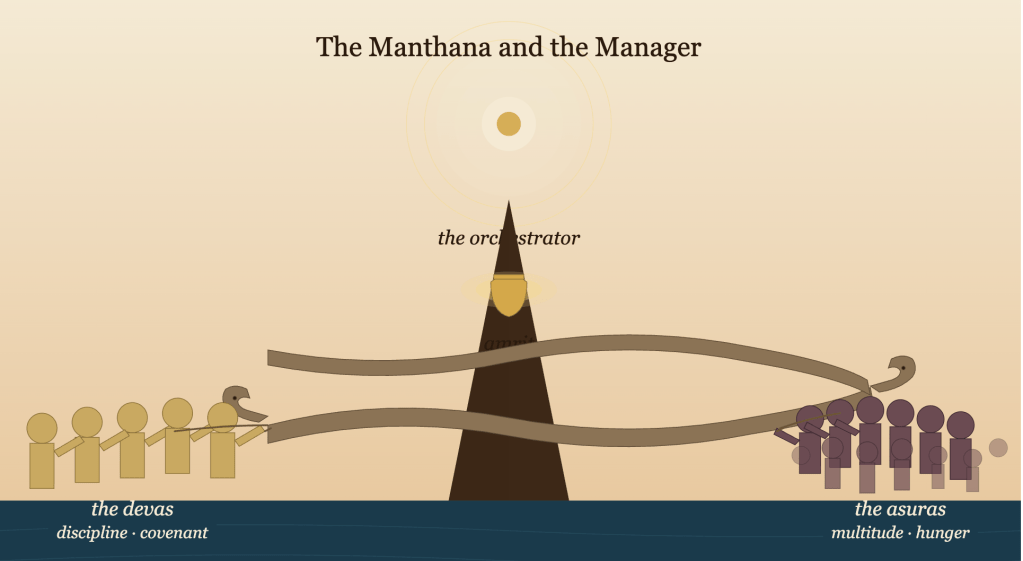
The Manthana: On AI Security Governance, Equipoise, and Why the Devas Were Ready
What makes a security team ready for a frontier AI model? Risk ownership, access and authority, read through the churning of the ocean.
-

When AI Finds Your Zero-Days: Patanjali, Brené Brown, and the Courage to Be Vulnerable
When AI can find every zero-day, security must move from patch to posture. Patanjali’s siddhis, Brené Brown on vulnerability, and the courage of the architect.
-

Prompt Is Not a Prayer
Who is accountable when an AI fulfils a prompt in an unintended way? The BrowseComp evaluation, read alongside the Bhagavad Gita.
-
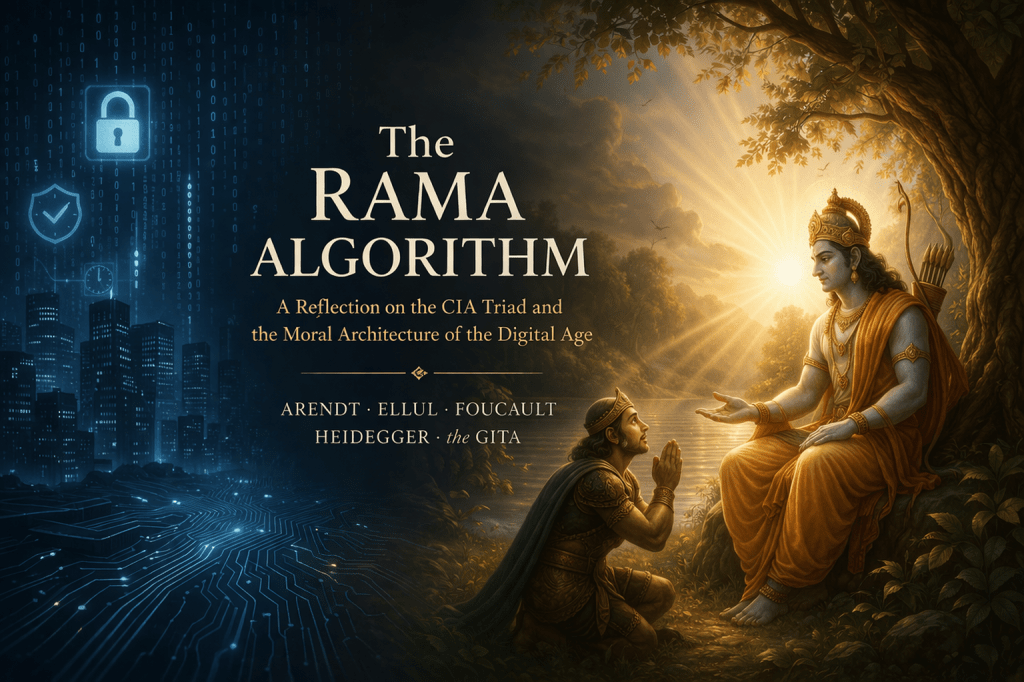
Rama Raksha: A Dharmic Rereading of the CIA Triad in the Age of Algorithmic Governance
The CIA triad of confidentiality, integrity and availability reread through dharma for an age of algorithmic governance, with the Rama Raksha as the frame.
-

Harvest Now, Decrypt Later
“Harvest now, decrypt later”, the security doctrine, read as a spiritual horizon: the story as a horizon rather than a box, the seeker’s three companions, and Krishna as the great…
-
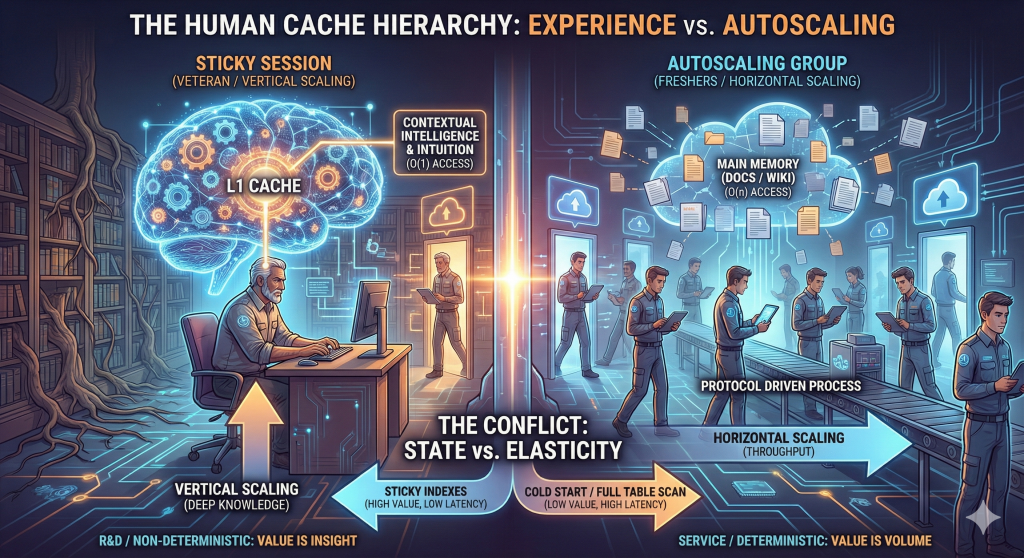
The Veteran as a Sticky Session: You Can’t Autoscale Experience
Autoscaling treats servers as disposable, but experience cannot be autoscaled. The veteran as a sticky session: indexes, caches and the cold-start problem.
-

The Ancient Ashramas and the Product Lifecycle
The four ashramas of life mapped onto a product lifecycle: student as design, householder as manufacturing, forest dweller as service, renunciate as decommissioning.
-

The Threshold: When Observation Becomes Obsession
The moment we cross from living to being lived by our measurements: the seduction of certainty, predictive imprisonment and the algorithmic appetite.
-

Two Observabilities: The Path That Binds and The Path That Frees
Two ways to watch yourself, from the outside in and from the inside out: why external observation imprisons while internal awareness liberates.
-

The Eigenvector of Being: Why True Accommodation Never Changes its Mind
The moment we say “I am accommodative”, something is lost. The eigenvector of being, and why true accommodation keeps its direction while making space.
-

The Mathematics of Mercy: Grace as a Poisson Process
If grace is a Poisson process, what follows? Grace and karma reconciled, the human response of receptivity, and why every model fails on a non-ergodic path.
-

The Markovian Enlightenment: When Memory Becomes Presence
From time-bound learning to timeless being: the non-Markovian sojourner, the Transformer as a mirror, three stages of consciousness, and Tat Tvam Asi.

