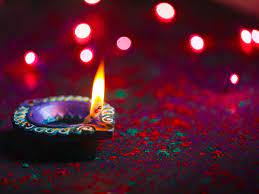

This is perhaps the greatest and biggest festival of India. There’s a striking chronology that resembles how a spiritual aspirant progresses through the stages. Like Ramayana, Ganesha birth story and Dhruva story, I plan to share what these Diwali days signify to me.
Rama Ekadashi: The journey starts this day when a spiritual aspirant observes fast, a period of abstinence. It doesn’t just mean not eating food, but it means being continent, restraining mind from frolicking. Rama means to rejoice in devotion.
Vasu Baras: Vasu means air. And Baras means 12. 12 years is called tapa. This day signifies the continuity which an aspirant has to maintain while being in the fast (observance). A cow gives birth to a calf. As soon as the air enters its ears, the calf starts walking on its own. That’s why we worship a cow and a calf. Similarly, whenever we do a deep breathing, meditation, we learn to walk on our own. Wisdom comes to us. We start syncing with primordial vibration Aum!
Guru Dwadashi: As an aspirant makes continuous progress in his sadhana or tapa (Dwadashi, 12 years), by His sheer Grace, we meet our Guru. Like Hanuman meets Lord Ram. Guru is Adnya Chakra. He enlightens a path towards our liberation. We then walk that path and become merged with Him.
Dhana Trayodhashi: Here an aspirant, while continuing his austerities, starts experiencing prosperity in his samsaric life. Dhanwantari epitomises health and Dhana symbolises wealth. Aspirant now becomes healthy, wealthy and wise. Remember the greatest proclamation by Lord Krishna in Gita? He helps us here and makes us not just robust and resilient but in my favourite author Nassim Taleb’s language, “Antifragile”!
Narak Chaturdashi: 14 has a significance. Lord Ram goes for 14 years in Dandakaranya. Dandak means regulation. Danda means penance. If one does penance or follows his dandakas or rituals for 14 years, then he characteristically, irreversibly and permanently changes from within. This samsara or suffering is like a hell. Full of sorrows and misery. Lord Krishna then kills Narakasura. By Lord’s grace, our wicked tendencies start dying. He ends our suffering thereby taking us out of the hell.
Abhyanga Snana, The dawn of Enlightenment: He kills our false beliefs, illusions (body) and delusions (mind) by showering His Holy Grace continuously on us. We bathe in His Grace and become Grateful, full of Gratitude. We start loving Him back even more. We take a holy dip in Bhakti.
Laxmi Pooja: This Laxmi is not wealth. Aspirant has moved beyond at this point. When we become true devotees of Him, Laxmi in the form of contentment, peace, wisdom, and company of good people comes to us naturally as she is His consort. Our mind becomes unmoved like Dhruva.
This day is Amavasya, a no moon day. Moon is a reflection of sunlight. Has no light of his own. So, in a way, it means being the Sun. Also, Amavasya connotes emptiness. An infinite potentiality. Our causal body.
Padwa, Bali Pratipada: Then like King Bali, we surrender unto Him. I ness in me dies. That’s why it’s called Atma Balidan, the greatest sacrifice, self sacrifice. And pratipada marks a beginning of a life which then, is truly absolutely free. Jivanmukta.
Yama Dwitiya: Yama and Yami are children of the Sun. In Bible, like the Son of a Father. Or Krishna consciousness. Yami is Yamuna river. Maya. Yama is her brother. How can he kill the aspirant? He just helps Yami in playing out her Divine scheme. Even though he is called a God of Death, in fact, he helps in making her creation ever New. Aspirant moves beyond death. However he honours death like Buddha does with Mara. Then, as the Jesus says, we continue to remain in this World but not of this World!
May the Lord take all of us from the darkness to the Light. Tamaso Ma Jyotirgamaya!
Happy Diwali!
 Reinvent The Self!
You must be logged in to post a comment.