
This blog series tries to muse about the Leadership their Role and Limitations!
-
River

It is the river which brings the people together, gives them a purpose to live, a meaning to their living. A river, since ages, has been a silent witness to so many civilizations from Mesopotamia to India. On its way, she “accepts” everything right from creeks, waterfalls, the water from beneath the soil, rocks and… Read More
-
Divine Impermanence

My ego feeds itself by perceiving a constant state of lack. It keeps telling me, “I need to be like this…For that I need to do something…”. Always. Incessantly. In short, my ego doesn’t let me be Still! This state of lack is full of my deluded understanding. About myself and about the world. Many… Read More
-
Data to Intelligence: Curiosity Forever!

Like natural resources, technology, now the data is making countries powerful. It’s not that data was not there all the time. It only means, we discovered the true power of data, in shaping the world affairs! Data motivates an aspect of Curiosity within all of us. And in turn, Curiosity changes the form of Data!… Read More
-
Strengths and Weaknesses

What are your strengths and weaknesses? It clearly has 2 answers. Honest and manipulative. These 2 are strengths in their own respect! If I answer it looking at the job description before, my answer would likely be manipulative. It might be possible that I am “filtering” my strengths and weaknesses to suit to the Job… Read More
-
पश्चात्ताप

अहंकार कधी, कुठे आणि कशा पद्धतीने आपलं डोकं वर काढतो ते मला खरंच कळत नाही. मला नेहमी असंच वाटतं की आपण किती योग्य वागतो. गोष्ट इथेच थांबत नाही, तर त्यापुढे जाऊन असंही वाटतं की बाकीचे सगळे कसे अयोग्य वागतात! काय गंमत आहे! मी यावर सिंहावलोकन करायचं ठरवलं. आणि माझ्या लक्षात आलं की मी यामुळे माझ्या… Read More
-
Surrender

Most of the blogs in this website talk about the importance of being present. When I am present, there’s no thought of past or future. I feel however, that in order to throw my past away, I have to seriously reflect on my past. Meditate on it. Be familiar with it. We say, forgive and… Read More
-
Waving Unwaveringly

Truly, the joy of Being is unconditional or independent! I remembered poet saint Jnaneshwar who said in his work, Amrutanubhav : “The joy of being is like a waving flag on the battlefield which is not concerned about who is the victor and who is the loser. It just continues to wave with the joy… Read More
-
Accept and Reject

When I start accepting the situation as it is without mixing it with my will (which is of course a reaction) to change it to suit my wants, I start to detach my Self from what is happening. Essentially because Self is independent and separate from all that is going on in my mind, within… Read More
-
Samskara

There are vibrations. Those are independent. Adi Shankara calls these Soundarya Lahari (Divine Vibrations). These vibrations are sensed by my senses. These sense organs are formed as a result of my samskaras (my past). They are passed to the brain through nervous system, called neural network. As these sensations pass, a lot of activations (transformations)… Read More
-
Curious Patience
There’re words which I often tend to misconstrue the meaning of. For example: Forgiveness: I tend to think that in present moment, there’s nothing to forgive. Because we never carry past, instead always live in present. My friend Patrick explained to me that, Jesus said, “Forgive them for they not know what they do”. Jesus did… Read More
-
Moments of Truth
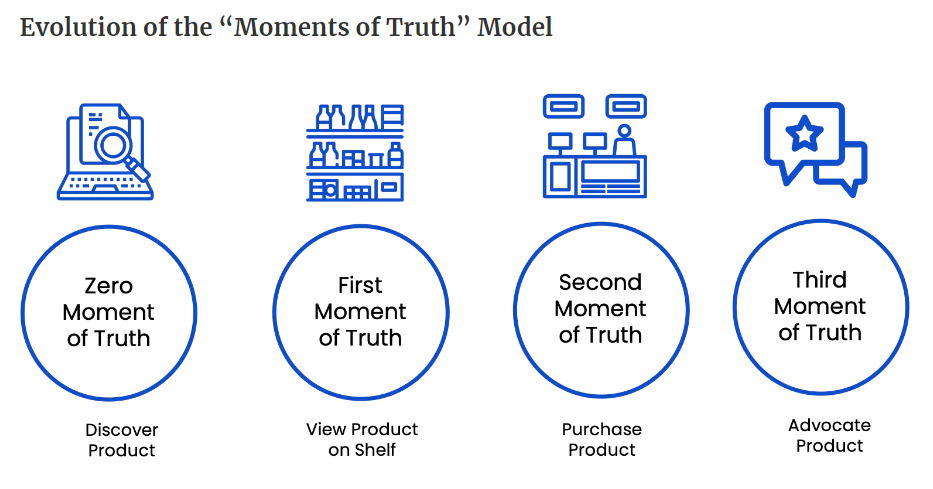
Heard about the 5 moments of truth? Moments are nothing but the opportunities to express love to the customer! This journey starts with stimulus, middles out in knowing and ends in an intimate emotional connect! Great organizations don’t make anything for the customer. They are made for the customer. The objective of Mindful CI is… Read More
-
A Strategy which had no Goal

The dictionary says #strategy means a plan of action or #policy designed to achieve a major or overall #aim. Another definition says, it is the art of devising or employing plans or stratagems toward a #goal. Essentially strategy has a goal. What if we remove the aim or goal and just stick with the plan of action or policy? In my… Read More
-
Rejection Therapy

There’s a clear survivorship bias in how we perceive success: we notice only those who emerged unscathed from a selection process or test, while the countless candidates who failed or were rejected—often better suited in many respects—fade into obscurity. This tendency makes “Rejection Therapy”—the deliberate practice of seeking out “no”s—a kind of built‑in fail‑fast strategy. By… Read More
-
Karma Yoga

Everyone strives for control, in some way or the other, over someone or something. The feeling of having control over something is really great or seemingly ultimate. In Karma Yoga, one tries to control his deeds. He focuses on doing the things which are dutiful, morally correct. It means those are either compatible with scriptures… Read More
-
Feedback

Much has been talked about the importance of giving and seeking feedback within the team and from outside the team. There’s no denying that. But what is feedback? Feedback means the gap between expected output and actual output. In controlsystems or in machinelearning, the expected output is accurately predictable whereas the actual output is accurately measurable. And because of this, feedback adds a… Read More
-
Exploration and Exploitation

There’s very famous exploration exploitation dilemma, wherein the crucial challenge is to strike a balance between the two. I don’t think there’s a dilemma in the first place. Both are totally independent. Both are noble. One doesn’t affect the other in anyway. In fact, both complement each other. Let me explain. Let us first think… Read More
-
Varna : From the Lens of an Enterprise

Our quest for understanding often leads us to ancient wisdom, seeking patterns that transcend time. The traditional Indian concept of the four Varnas – Brahmin (the wise and visionary), Kshatriya (the implementers and protectors), Vaishya (the traders and sustainers), and Shudra (the servers and supporters) – described a framework for societal functioning. While its historical… Read More
-
The Double Bind: When Work Stops Being Familiar and Weekends Aren’t Enough

The post explores the duality of human experience between stability and adventure in contemporary life. While routine offers comfort, weekend escapades often lead to increasingly extreme activities as a response to work-induced monotony and change. This paradox highlights the struggle for balance in an uncertain world where neither work nor leisure truly satisfies. Read More
-
When Krishna Went to War: The Difference Between Correction and Protection

On dharmic action, boundary enforcement, and why the Mahabharata teaches us something far more subtle than “stand up to your elders” In the quiet desperation of modern family conflict, we reach for ancient frameworks. The Mahabharata—that vast epic of cosmic war—seems to offer validation: See? Even Krishna exhausted all peaceful means before resorting to force.… Read More
-
What They Still Don’t Teach You At Harvard

From Street Smarts to Stillness: Why the Next Evolution of Business Wisdom Requires Learning to Stop When Mark McCormack wrote What They Don’t Teach You at Harvard Business School in 1984, he threw down a gauntlet that an entire generation picked up and carried forward. His message was electrifying in its simplicity: the real world… Read More
-
The Illusion of Control: Why RTO Mandates Reveal a Crisis in Understanding Consciousness

On management, artificial intelligence, and the impossibility of claiming credit when working with any form of consciousness The Uncomfortable Truth A recent MIT Sloan Management Review article by Brian Elliott drops a bomb that many executives would prefer to ignore: “Return-to-Office Mandates: How to Lose Your Best Performers.” The data is damning. RTO mandates don’t… Read More
-
The Currency of Consciousness: From Double-Spending to the Dissolution of Time Itself

Part I: The Aphorism Inverted We begin with a familiar piece of wisdom that has guided Western civilization for centuries: Benjamin Franklin’s “A penny saved is a penny earned.” This maxim seems so obviously true that questioning it feels almost sacrilegious. Thrift equals prosperity. Saving equals earning. The equation appears mathematically sound. But what if… Read More
-
The Primacy of Love: Why Strategy is Dead and Everything You Need Already Flows

Today, strategy is over-glorified. We hire strategists, praise “strategic minds,” and fetishize pattern recognition. But this signals a fundamental loss of the plot. We have confused the blueprint for the building. In love—real love—goals arise not from ambition but from affection. The singer sings “Shriramachandra Preetyarthe”—to please Lord Ram—not because they planned to, but because… Read More
-
Why Strategy Is a Derivative and Love the Underlying Asset
In memory of all the dreams that died on the altar of strategy, and in celebration of all the miracles born from simple, unstrategic love. We live in an era obsessed with strategy. From boardrooms to battlegrounds, spiritual retreats to startup incubators, strategy is glorified as the master key to success. The strategist is seen… Read More
-
The Rama Algorithm and the Parallel Government We Serve: A Spiritual Reckoning with Our Digital Age
A critique of our modern condition through the lens of ancient wisdom We live in a world governed by algorithms. They curate our news, suggest our connections, optimize our routes, and increasingly shape our desires. But what if the most fundamental algorithm governing existence isn’t written in code? What if it’s an ancient, eternal principle—and… Read More
-
The AI Paradox: How a Dialogue on Communism Led to the Core of Human Authenticity
It began, as many profound conversations do, late on a Sunday night here in Pune. What started with a single, provocative thesis about Artificial Intelligence spiraled into an hours-long dialogue that journeyed through economics, technology, power, and philosophy, ultimately arriving at the most fundamental question of all: What does it mean to be human in… Read More
-
The Merit Trap: Where Good Careers Go to Die

The “Merit Trap” Was Just the Beginning. The Real Crisis Is Organizational Entropy. I think I’ve realized the hidden physics of why great people stall, and why great companies decay. Most people blame “office politics.”But politics is not the disease — it’s the symptom. The real disease is The Merit Trap + Zero-Sum Energy Theory,… Read More
-
The Tolerance–Responsibility Cycle

How Rights Mature into Character A Dharmaśāstra for Political Maturity यदा यदा हि धर्मस्य ग्लानिर्भवति भारत । अभ्युत्थानमधर्मस्य तदात्मानं सृजाम्यहम् ॥ — Bhagavad Gītā 4.7 Prologue: Beyond Assertion Modern discourse about rights often terminates at assertion: my right versus your authority, my freedom against your order. But societies do not survive on assertion alone. They… Read More
-
The Ancient Ashramas and the Product Lifecycle

We often seek patterns, a sense of order in the unfolding narrative of our lives. The ancients, with their profound introspection, gifted us frameworks like the Ashrama system from India – a four-stage blueprint for a fulfilling life. Brahmacharya (student), Grihastha (householder), Vanaprastha (retired/forest-dweller), and Sannyasa (renunciate). It’s a map of growth, contribution, withdrawal, and… Read More
-
Hidden Tax of Prevention: “Better Than Cure” May Be Costing You More

An inquiry into the paradox of preventive health, the anxiety it breeds, and the possibility of a different way The Unquestioned Axiom “Prevention is better than cure.” We inherit this phrase like furniture from a deceased relative — useful, familiar, but never examined. It sits in our mental living room, shaping our movements without our… Read More
-
The Veteran as a Sticky Session: You Can’t Autoscale Experience

In the modern IT landscape, autoscaling is the holy grail. We design systems to treat servers as disposable commodities—spinning them up when demand spikes and terminating them the moment traffic drops. It is efficient, cost-effective, and resilient. Cloud-native architecture celebrates elasticity over permanence. Lately, I’ve noticed organizations applying this same architectural pattern to people. The… Read More
-
Harvest Now, Decrypt Later

Horizon, Hope, and Krishna as the Great Attractor In the world of information security, there is a pragmatic doctrine: “Harvest now, decrypt later.” Data is captured today, not because it can be understood immediately, but because one day the means to unlock it may arrive. What remains opaque in the present is preserved in the faith of… Read More
 Reinvent The Self!
You must be logged in to post a comment.